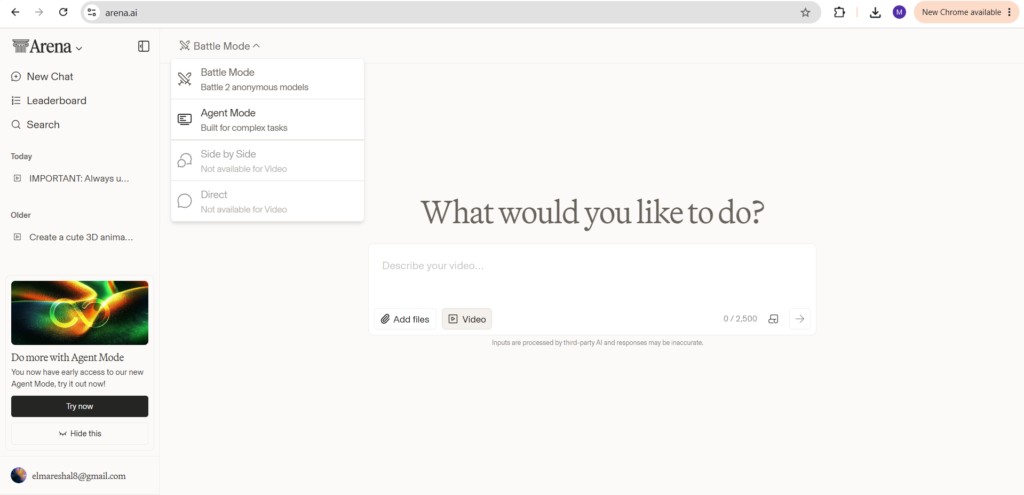
Recently, I decided to test another AI tool called Arena AI.
This time, the goal was different.
I wanted to see if I could transform AI-generated cinematic scenes into actual videos instead of just static images.
And honestly?
The experience was both impressive… and frustrating at the same time 😭
But that’s exactly why I wanted to write about it.
Because most people online only show the final result.
Nobody talks about the real workflow behind it.
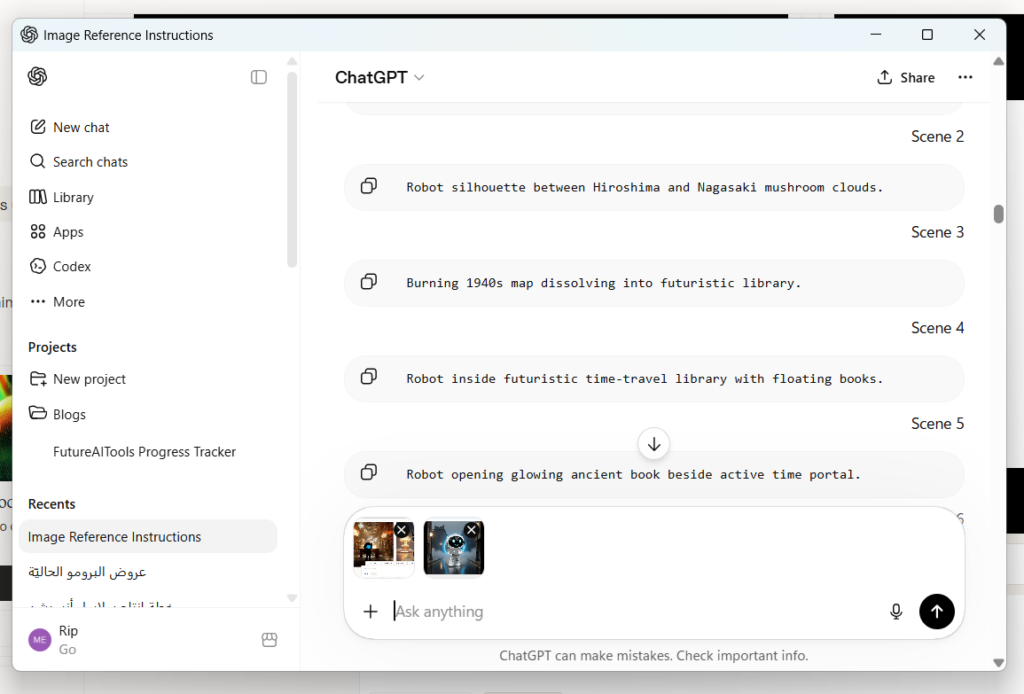
Everything started inside ChatGPT.
Instead of randomly typing prompts into Arena AI, I first used ChatGPT to organize:
- scene structure
- cinematic direction
- character consistency
- visual atmosphere
- storytelling flow
This step became extremely important later.
One thing I learned quickly:
Arena AI is powerful visually…
but it depends heavily on the quality of the prompt.
Bad prompt = chaotic video 💀
Good prompt = cinematic result.
So ChatGPT basically became the “brain” behind the workflow.
ChatGPT:
ChatGPT
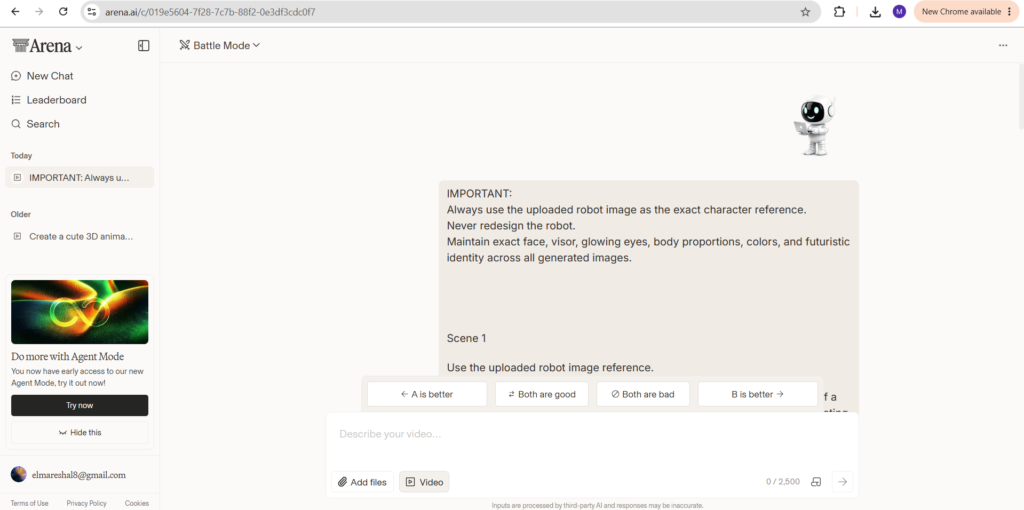
After generating and optimizing the prompts, I moved everything into Arena AI.
This was actually one of the coolest parts of the process.
The interface feels clean, modern, and beginner-friendly.
What I liked immediately:
✅ Simple workflow
✅ Easy image/video upload
✅ Fast generation process
✅ Cinematic visual quality
✅ Battle Mode comparison system
The platform feels more creative-focused than technical.
Which honestly makes experimenting much more fun.
Arena AI:
Arena AI
The Biggest Thing I Noticed About Arena AI
Arena works best when:
- your prompts are already optimized
- your scenes are cinematic
- your character design is consistent
- your visual direction is clear
If you throw random prompts into it…
…the output becomes random too 😭
That’s why prompt engineering became almost more important than the generation itself.
And this is something many people still underestimate about AI workflows.
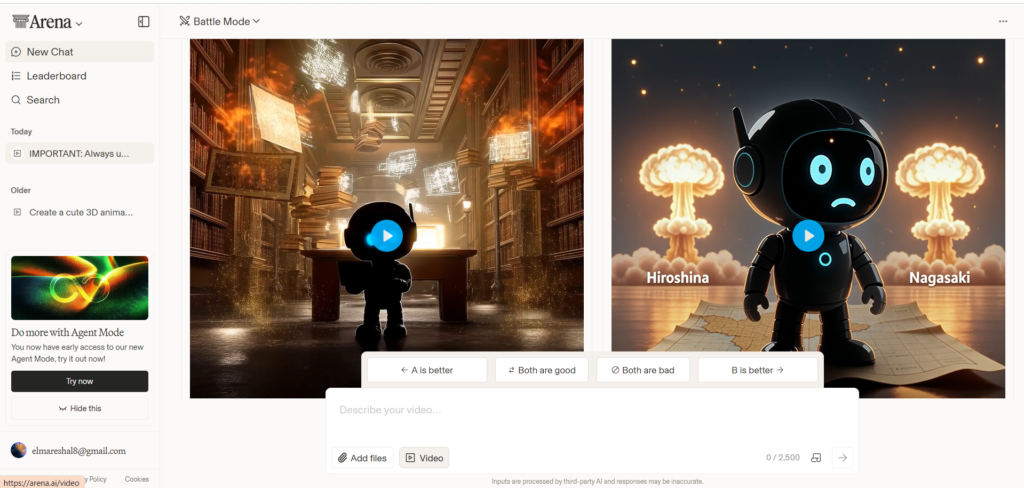
This feature honestly surprised me.
Arena generated two different video interpretations of the same scene.
And then it lets you compare them side-by-side using Battle Mode.
This was actually super useful because:
- one version sometimes had better animation
- another had better lighting
- another had smoother camera movement
It made the process feel less like “AI generation”…
…and more like directing and selecting shots for a movie.
That’s a very different creative experience.
What I Liked About Arena AI
1. The Cinematic Feeling
This is probably Arena’s strongest point.
The generated videos already feel:
- atmospheric
- emotional
- cinematic
- animated
- visually dramatic
Even simple prompts can produce surprisingly beautiful shots.
2. Easy To Use
The workflow is simple enough that beginners can start experimenting quickly.
No complicated setup.
No technical headache.
No giant learning curve.
That matters a lot for creators.
3. Battle Mode Is Actually Smart
The side-by-side comparison system is underrated.
Instead of blindly accepting one result, you can compare multiple cinematic interpretations.
This makes iteration much faster.
The Weaknesses
Of course, the platform still has issues.
1. Character Consistency
This is still one of the biggest AI problems overall.
Even with references, sometimes:
- face proportions change
- lighting shifts too much
- animation style changes slightly
So maintaining continuity still requires work.
2. Prompt Dependency
Arena heavily depends on prompt quality.
If your prompt is weak,
the video quality drops immediately.
This means:
you still need another tool like ChatGPT to help build strong prompts.
Arena alone is not enough.
3. Limited Control
Sometimes the AI chooses:
- weird camera movement
- strange animation pacing
- unexpected visual decisions
And you can’t fully control everything yet.
It still feels like collaborating with AI…
not fully directing it.
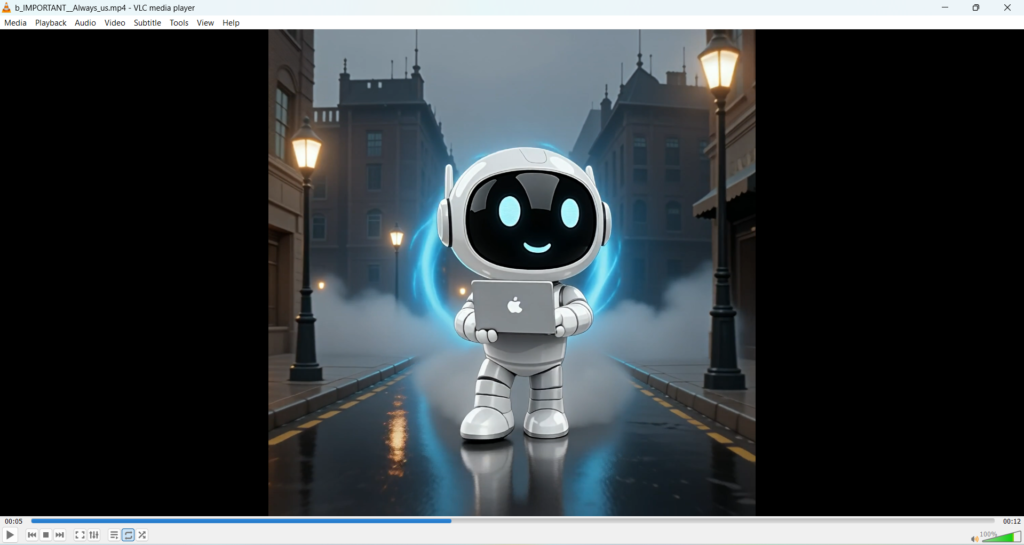
This was the final generated result from the workflow.
And honestly?
Seeing the robot scene move like an actual animated cinematic shot felt crazy
At this point, it stopped feeling like:
“AI image generation.”
It started feeling closer to:
AI-assisted filmmaking.
That’s a huge difference.
What This Experiment Taught Me
The biggest lesson?
AI tools are becoming creative production pipelines.
Not just generators.
Today, you can already combine:
- ChatGPT
- image generators
- video generators
- sound design
- subtitles
- AI voice tools
…to build something that genuinely feels cinematic.
But the most important thing is still human creativity.
The tools can generate visuals.
But humans still create:
- meaning
- emotion
- pacing
- storytelling
- direction
And honestly…
that’s what makes this whole space exciting right now