At first, I was just experimenting with AI image generators like everyone else.
Type a prompt.
Generate a cool image.
Post it online.
Done.
But after a while, I started wondering:
“What if AI could become more than just an image tool?”
What if it could help create an entire cinematic storytelling workflow?
That single question turned into one of the most interesting creative experiments I’ve done recently.
And honestly… it completely changed the way I look at AI tools.
It Started With One Small Robot
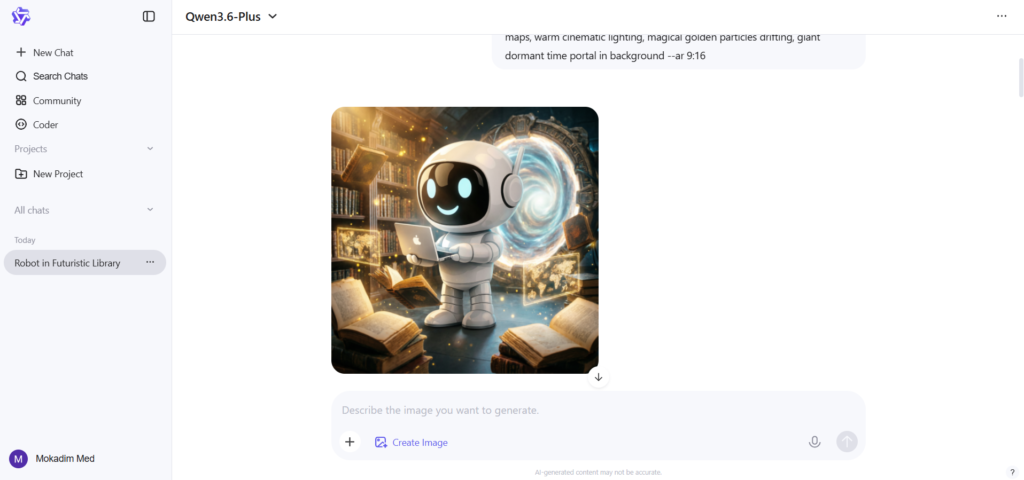
Everything began with a simple futuristic robot image inside a magical sci-fi library.
At first, it was just a cool concept image.
But then I asked myself:
- Can I keep the same character consistent across multiple scenes?
- Can AI help create a cinematic atmosphere?
- Can I build emotional storytelling using only generated visuals?
- Can AI images start feeling like movie scenes instead of random artwork?
That’s where the real journey started.
(Insert the close-up robot nuclear reflection image here)
This was the moment I realized the project could actually work.
The reflection of the nuclear explosion inside the robot’s visor immediately created emotion and tension.
What surprised me the most was how cinematic the lighting looked.
At this point, I wasn’t thinking about “AI images” anymore.
I was thinking about scenes.
The Tools I Used
Qwen 3.6 Plus
This became my main image generation tool during the project.
What I liked about it:
✅ Strong cinematic lighting
✅ Great sci-fi atmosphere
✅ Fast generations
✅ Beautiful volumetric fog
✅ Strong emotional framing
But it definitely had weaknesses too 😭
The Problems
❌ Character consistency was difficult
❌ The AI often forgot the robot design
❌ Long prompts confused the model
❌ Some generations randomly changed styles
At first, every image looked like a different movie.
One image looked Pixar-like.
Another looked hyper realistic.
Another looked like a game cutscene.
That’s when I realized something important:
AI does not naturally understand continuity.
You have to guide continuity manually.
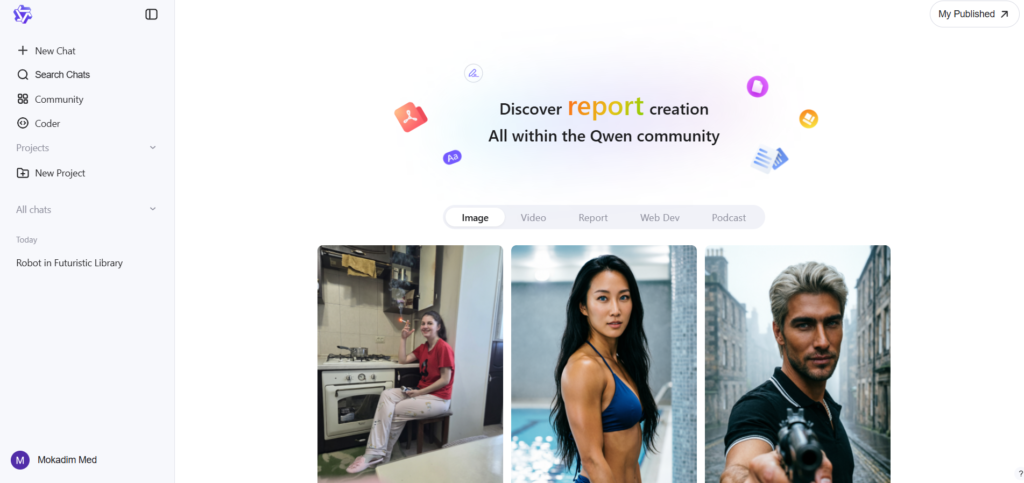
Qwen:
Qwen Chat
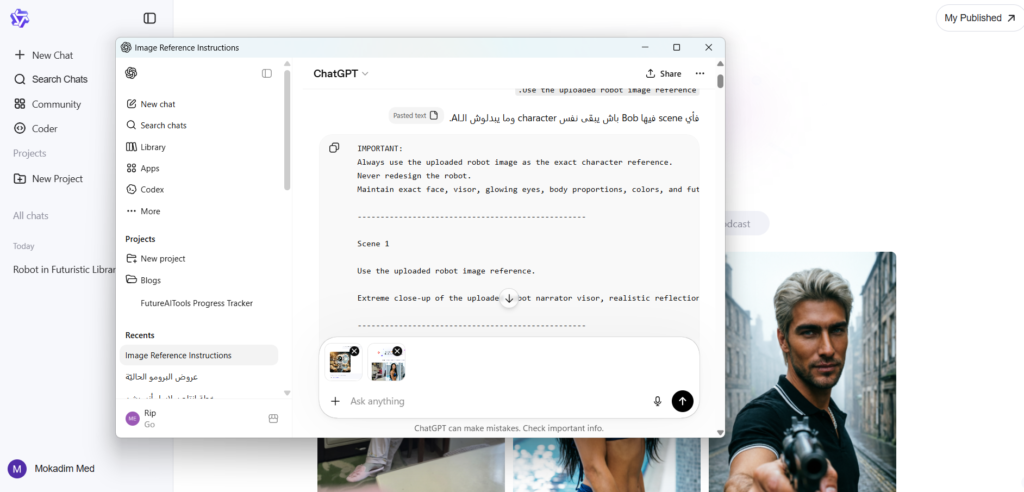
ChatGPT
Surprisingly, ChatGPT became less of a chatbot…
…and more like a creative director
I used it for:
- cinematic prompt engineering
- scene planning
- workflow optimization
- visual storytelling
- consistency fixes
- shortening prompts
- production organization
Instead of randomly writing prompts, I started thinking more like a filmmaker.
That completely changed the results.
ChatGPT:
ChatGPT
This was one of the first moments where the story started feeling emotionally connected.
The split composition between Hiroshima and Nagasaki instantly made the scene feel heavier emotionally.
The robot no longer felt like a mascot.
It started feeling like a character.
And honestly, that changes everything in storytelling.
The Biggest Challenge: AI Memory 💀
This was easily the hardest part of the entire process.
Every new generation risked changing the robot completely.
Different face.
Different proportions.
Different style.
Sometimes the robot looked cute.
Sometimes terrifying.
Sometimes completely unrelated to previous scenes.
That’s when I learned one of the biggest lessons about AI generation:
Consistency is not automatic.
You need:
- reference structure
- identity constraints
- visual memory
- style reinforcement
Without those things, the AI drifts constantly.
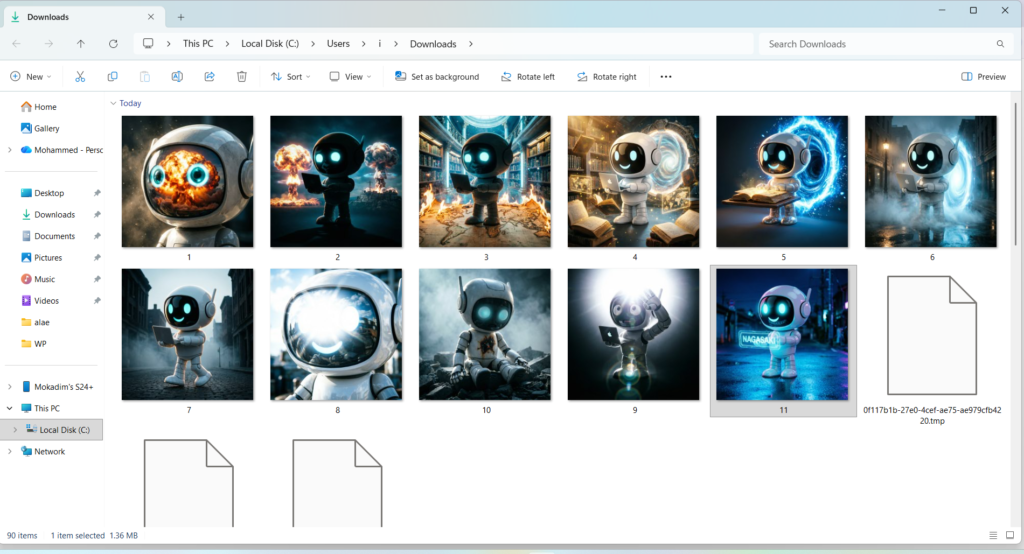
(Insert the futuristic library image here)
This image changed the atmosphere of the entire project.
The futuristic library became the emotional core of the story.
Instead of random sci-fi visuals, the scenes suddenly started feeling connected through location and mood.
The glowing portal, floating books, and warm lighting gave the project a real cinematic identity.
The Prompt Trick That Changed Everything
At first, my prompts were huge.
Long paragraphs.
Too many instructions.
Too much detail.
Eventually the AI started getting confused.
So I simplified the workflow.
One sentence improved everything:
“Use the robot image uploaded at the beginning of the discussion as the exact character reference.”
That single line dramatically improved consistency.
Then I combined it with:
- shorter prompts
- clearer cinematic direction
- stronger visual keywords
The results immediately became cleaner.
This was the moment the project stopped feeling like image generation…
…and started feeling like movie direction.
The portal scenes created movement between timelines and gave the visuals a sense of progression.
At this stage, I was no longer generating “pictures.”
I was building sequences.
From Images To Storytelling
Eventually every image became part of a larger cinematic sequence.
Some of my favorite moments were:
🔥 Nuclear reflections
🔥 Futuristic library scenes
🔥 Emotional post-apocalyptic shots
🔥 Neon “NAGASAKI” atmosphere
🔥 Portal transitions
🔥 The emotional ending scenes
And the biggest realization was this:
AI images become much more powerful when they are emotionally connected.
Not just visually connected.
This became one of my favorite generated frames.
The damaged robot sitting silently on the rubble suddenly gave the character emotional weight.
For the first time, it didn’t feel like “a robot image.”
It felt like a survivor.
And honestly, that surprised me more than the visuals themselves.
AI Is Not Magic
One thing this project taught me:
AI is not a one-click creativity machine.
The people getting the best results are usually the people who understand:
- storytelling
- pacing
- visual composition
- cinematic atmosphere
- emotional direction
AI is powerful.
But without human vision, it quickly becomes random noise.
Honestly, AI feels less like a replacement for artists…
…and more like a creative amplifier.
This final scene was designed to bring the atmosphere back to calmness after all the chaos.
The soft lighting and quiet mood made the ending feel strangely emotional.
It felt less like the end of an AI experiment…
…and more like the end of a short film.
The Next Step
Right now, I’m working on turning these scenes into a complete AI cinematic short film using:
🎧 sound design
🎼 cinematic music
📝 subtitles
🎤 AI voice narration
⚡ animated transitions
🎥 video generation
The goal is no longer:
“generate cool images.”
The goal is:
create an emotional cinematic experience using AI tools.
Final Thoughts
This experiment taught me something important:
The future of AI creativity is not about who has access to the best tools.
Because eventually, everyone will.
The real difference will come from:
- imagination
- storytelling
- workflow design
- emotional direction
- creative thinking
AI can generate images.
But humans still generate meaning.
And honestly?
This feels like only the beginning